Our bodies emit a stream of low-energy photons, and now experiments inmice have revealed that this ghostly glow is cut off when we die
NewScientist
All living things, including humans, constantly emit a ghostly glow – and itappears to vanish almost as soon as we die. Monitoring this signal could oneday help track forest health or even detect diseases in people.The existence of this barely perceptible glow has been controversial, but it isthought to be the result of a process called ultraweak photon emission.Mitochondria and other energy-producing machinery in our cells involve
biophotons” are extremely difficult to detect and disentangle from otherbiological processes or light sources, such as the radiation produced by anywarm object.
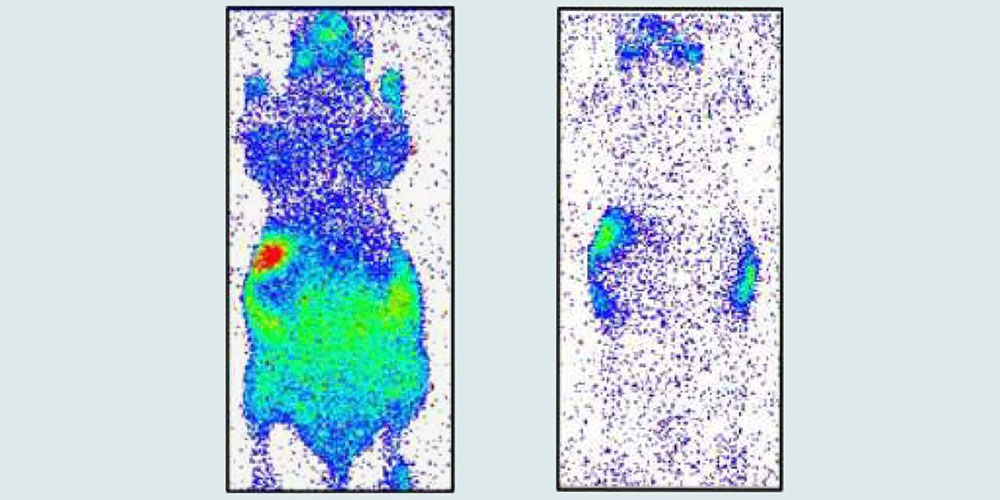
Now, Dan Oblak at the University of Calgary in Canada and hiscolleagues have isolated what happens to these biophotons when an animaldies, imaging ultraweak photon emission across an entire mouse before andafter its death. “The fact that ultraweak photon emission is a real thing isundeniable at this point,” says Oblak. “This really shows that this is not justan imperfection or caused by other biological processes. It’s really somethingthat comes from all living things.”Oblak and his team used digital cameras that could detect single photons toproduce two, hour-long exposure images of four hairless mice, one before andone after death. The animals were kept at the same temperature to excludeheat as a factor and in a dark box to avoid light pollution. They found thatbiophoton emission significantly decreased after death across the wholemouse.
They also took pictures of umbrella tree (Heptapleurum arboricola) leaves theyhad cut, and found that the plant’s injury repair mechanism increasedbiophoton emission, while various drugs applied to the plant surface, such asthe numbing drug benzocaine, also appeared to do the same.It isn’t surprising that biophotons stop being emitted when you die becausethey are a byproduct of metabolic cellular processes that cease after death,research has shown this for individual cells and smaller body parts. However,it hasn’t been done for a whole animal before, and because Oblak and his teamhave been careful to exclude other potential light sources, we can be confidentthat we are really seeing biophotons, says Mackenzie.
Michal Cifra at the Czech Academy of Sciences in Prague saysthe absence of biophotons after death is mainly due to the lack of blood flowaround the body, because oxygen-rich blood is one of the key drivers ofmetabolism, which produces biophotons. If the blood had been kept artificiallycirculating, says Cifra, then they would still observe the same biophotonemission, he says. “It’s not related to the systemic liveliness, it’s related tothe liveliness of the optically accessible tissue.”The technology could one day be used to monitor living tissue withoutperforming invasive tests, or monitoring forest health from afar at night, saysOblak. “The nice thing about ultraweak photon emission is it’s a completepassive monitoring process.”